Barely six months after Chief Secretary to the Government Justin Saidi touted a reduction in the number of principal secretaries (PSs) from 80 to 38 as geared towards efficiency, the number has now risen.
The Nation has established that at least 60 officers hold the position of PS, with some ministries such as Finance, Economic Planning and Decentralisation having up to four.
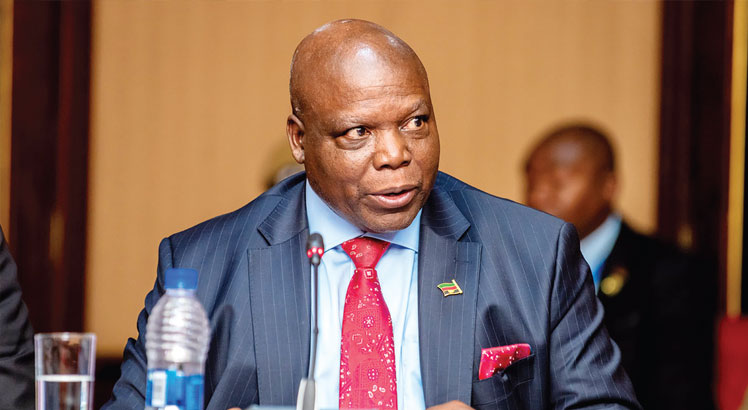
Saidi. | Nation
In a written response yesterday, OPC spokesperson Focus Maganga conceded that the number is slightly higher than stated earlier because some additions were necessitated by need.
However, he said the number was still lower than what the Democratic Progressive Party administration inherited from the Malawi Congress Party (MCP) after the September 16 2025 General Election.
Maganga said the reduction reflected the spirit of ongoing austerity measures.
He said: “It is true a few principal secretaries have been added, such decisions have been driven strictly by operational necessity. For instance, the separation of Mining from Energy was essential to strengthen governance and unlock the sector’s economic potential while reforms to the Constituency Development Fund required enhanced oversight and coordination.
“These appointments are, therefore, based on functional requirements and institutional needs, not administrative convenience or political expediency.”
The Nation further established that out of the 60 on PS grade, 50 actively serve as controlling officers while the others are assigned special duties at OPC, a section where some officers are placed after reportedly falling out of favour with new political administrations.
In separate interviews, three serving PSs confirmed that they were posted to the section, commonly referred to as ‘Guantanamo’ after a US naval and military detention camp in Cuba established in 1903 and turned into a detention camp from 2002.
The trio said they have no defined assignments but continue to draw PS perks.
One of the PSs said some of their colleagues do not even report for duties regularly or work half day for lack of assignments.
The practice is not new as during the MCP administration, some PSs were also assigned “special duties”.
However, what stands out now is that the number of PSs appears to contradict government’s public expenditure control message.
Besides the 10 PSs assigned special duties, the OPC has five other PSs.
An official list of PSs The Nation has seen shows that three PSs are listed under OPC itself, namely Rashid Ntelera, Patrick Matanda and Samson Ngutwa.
The list also shows that Public Sector Reforms, which also falls under OPC, has two PSs—Luckie Sikwese and Richard Perekamoyo while there is one each for the Department of Human Resource Management and Development and the Office of the Clerk to the Cabinet.
Treasury and the ministry responsible for Industrialisation, Business, Trade and Tourism have four PSs each.
At Treasury, the listed PSs are the Secretary to the Treasury himself, Cliff Chiunda, Peterson Ponderani, Patrick Limphava and Patrick Kabambe. The Accountant General’s Department, which falls under Treasury, is headed by Sungani Mandala, bringing the number under the finance portfolio to five.
Ministry of Industrialisation, Business, Trade and Tourism has Wiskes Nkombezi, Bright Molande, Jean Munyenyembe and Maxwell Tsitsi as PSs while Agriculture, Irrigation and Water Development has Erica Maganga, Henrie Njoloma and Bennet Nkasala.
Other ministries have either one or two principal secretaries, bringing the total to about 60, including Deputy Chief Secretary to Government Stuart Ligomeka, who also doubles as Comptroller of Statutory Corporations.
Governance commentator Willy Kambwandira said the revelation confirms that politics often stands in the way of implementing p reforms.
“This exposes a disturbing gap between government pronouncements and actual practice. Austerity cannot be preached to struggling Malawians while political establishment maintains an expensive, bloated bureaucracy to accommodate political interests. It appears the so called austerity agenda remains political theatre,” he said.
Speaking during an orientation for PSs in Lilongwe in February this year, Saidi said the number of PSs was reduced from 80 to 38 to improve efficiency and cut public expenditure.
His statement in February was not the first time the Peter Mutharika administration expressed interest in reducing the number of PSs. During his first term between 2014 and 2020, the 2015 Public Service Reforms Commission final report, Making Malawi Work, recommended reducing the number of PSs from 96 to 40.
According to the report, this target was to be achieved by “deleting irrelevant portfolios, deploying some PSs and exiting those that may not be required within the system”.
Political scientist Nandini Patel questioned why the practice of putting some public officers on “the bench” after a change of administration has continued for so long when disciplinary action can be pursued if wrongdoing is established.
Political scientist Ernest Thindwa, who is familiar with public administration, said the issue of excess PSs arises from failure to follow the law and proper procedures.